


What exactly is a SCOBY?
You've probably wondered what the word SCOBY stands for or where it comes from. SCOBY is the English acronym for SYMBIOTIC CULTURE OF BACTERIA AND YEASTS. In simple terms, it's a symbiosis of bacteria and yeasts.
For centuries, alongside the word SCOBY, the term "Kombucha tea mushroom" has become established in society. However, it's not a true mushroom.
What does a Scoby consist of and how is it structured?
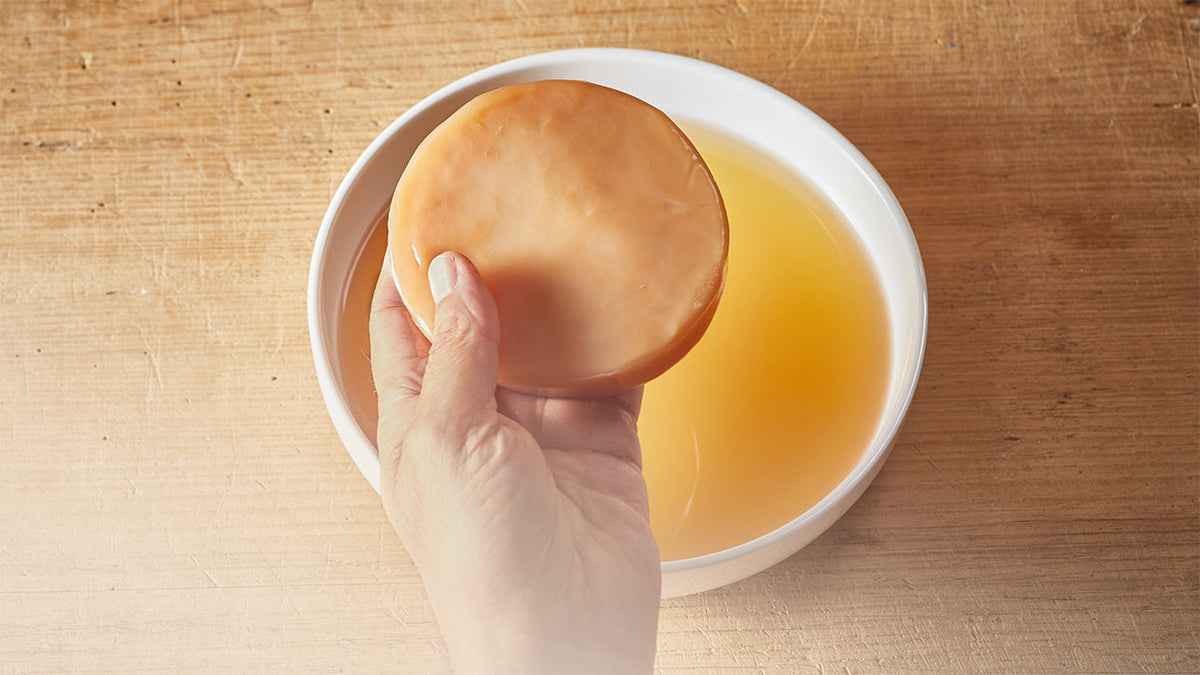
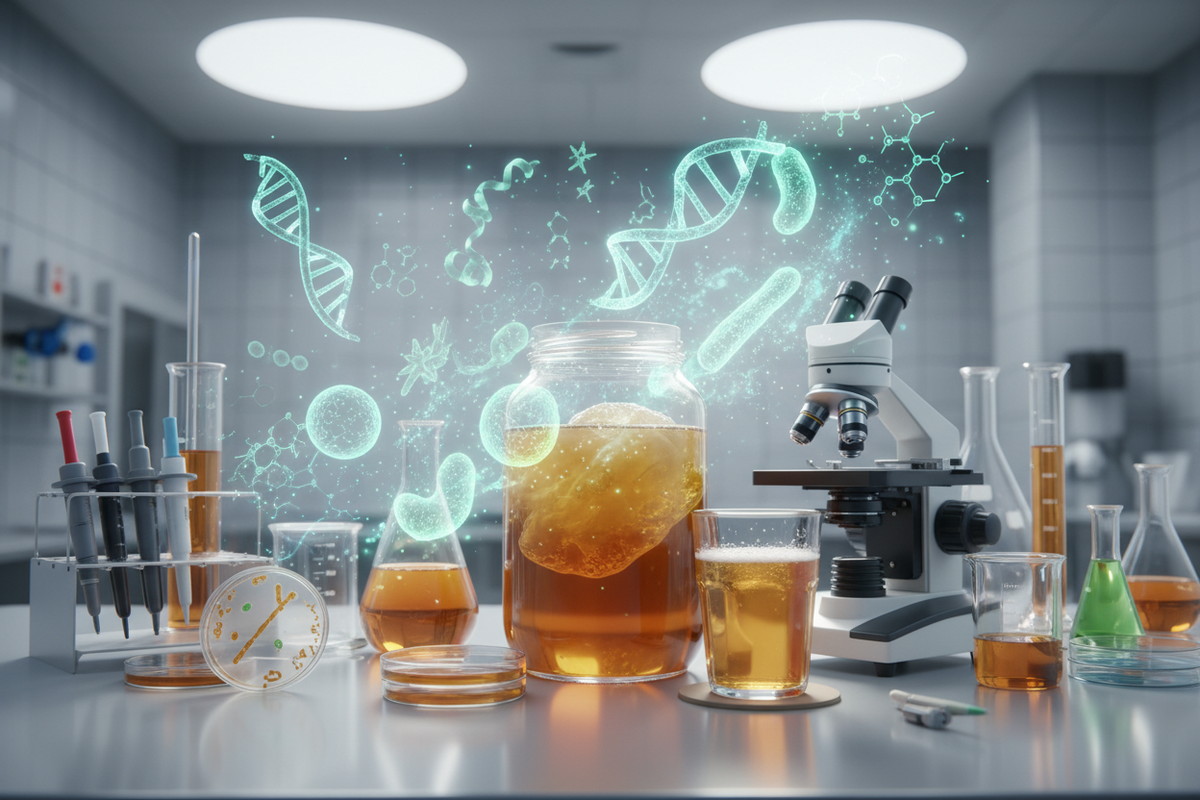
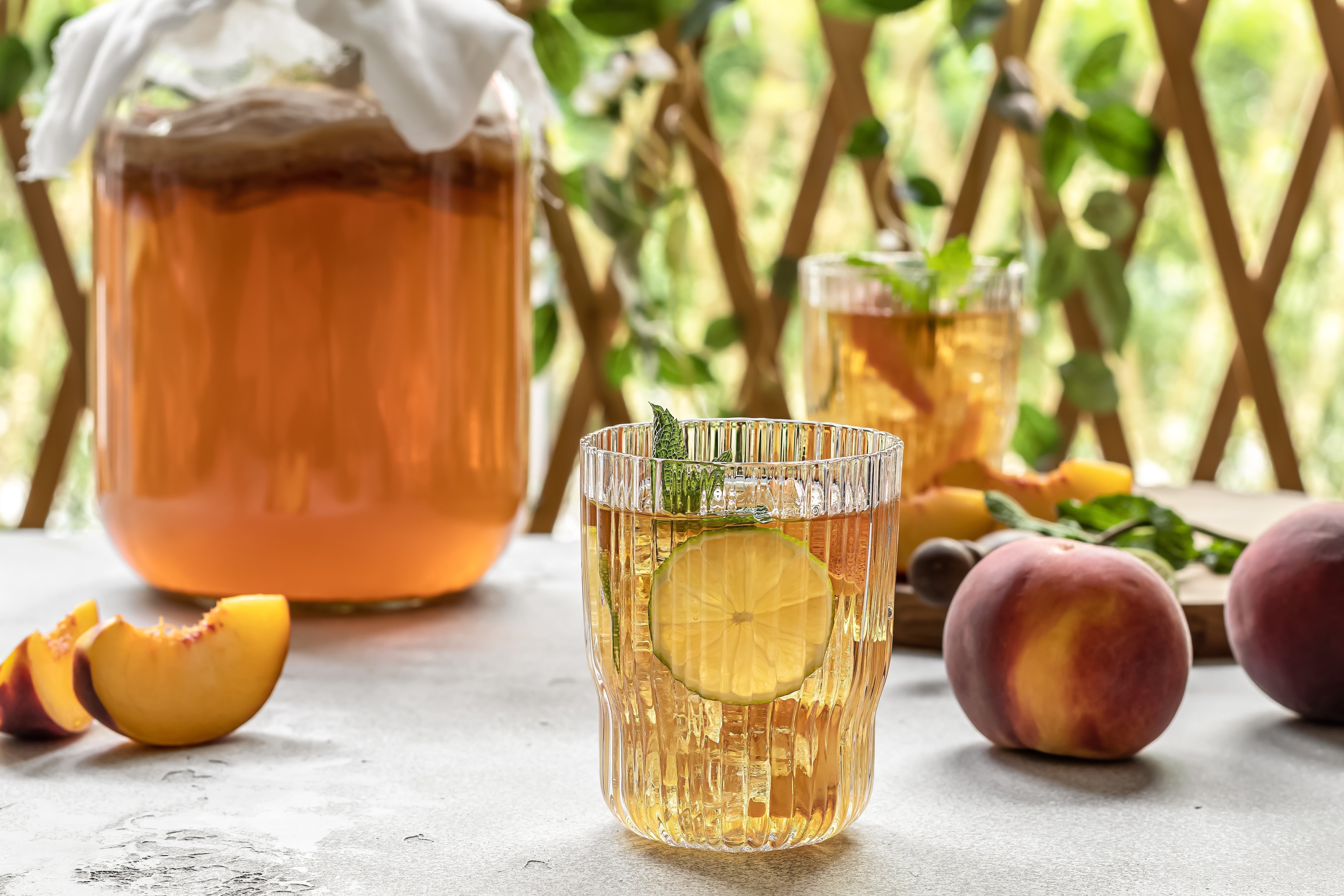
The SCOBY is actually not a real tea mushroom. It is rather a cellulose matrix colonized by bacteria and yeasts and therefore neither a classic mushroom nor a lichen. The microorganisms form a community in which various metabolic processes are interconnected. Yeasts can metabolize sugar into ethanol and carbon dioxide, among other things. Certain acetic acid bacteria can then convert ethanol into organic acids such as acetic acid under the influence of oxygen.
Although there are many different visual variations of Scobys, it is usually round like a pancake and its consistency is somewhat slimy. Its surface can be smooth, but also very uneven. During the fermentation process, holes or small bulges can also form in the Scoby – this is completely normal! Depending on the liquid content, the Kombucha tea mushroom is more or less translucent in its composition.

How does a Scoby work?
The Kombucha tea mushroom first spreads out on the surface of the so-called nutrient solution. It wants to get as much oxygen as possible. This thickens the underlying tea mushroom culture or a new Scoby forms. The Scoby constantly forms new, tightly packed layers and thus becomes thicker and thicker. In some cases, the Scoby sinks to the bottom of the fermentation vessel. A new tea mushroom then forms on the surface, and the Scoby at the bottom of the vessel stops growing.
We will explain how you can grow your own Scoby with a little patience, the right ingredients, and very simple equipment!
You will need:
- 1 large glass container with a wide opening – well rinsed without dish soap! (Vinegar is a practical cleaner)
- Tea – e.g., green tea, black tea (without flavorings/artificial additives)
- Organic raw cane sugar
- Water – preferably filtered
- Unpasteurized kombucha (e.g., Kombucha Original)
- 1 breathable clean cover cloth
- Environment for the Scoby: 1 room with a temperature between 20 and 30 degrees
And off we go:
- Boil tea with cane sugar for 8 to 10 minutes (8g tea per liter / 60g organic raw cane sugar per liter)
- Pour the tea-sugar mixture into the glass container and let it cool, preferably overnight. Important: Cover the glass with the breathable clean cloth and secure it with a rubber band or string!
- The sugar should now be completely dissolved
- Now, unpasteurized kombucha can finally be added in a 1 to 10 ratio
- Then, re-secure the cover cloth tightly to the container and place the glass in a safe place

Depending on the conditions, it can take 7 to 21 days for the kombucha mushroom to form completely on its own. Initially, it looks as if small foam bubbles are forming on the surface of the liquid. These will become denser over time until the Scoby slowly becomes visible.


Share:
2 comments
Hallo Miri,
die Flüssigkeit kannst du für ein SCOBY-Hotel oder als Ansatzflüssigkeit für neuen Kombucha verwenden. Beim neu ansetzten, sollten 100-150ml pro Liter immer Ansatzflüssigkeit (sehr saurer und starker Kombucha) sein. Liebe Grüße!
Hallöchen,
so jetzt habe ich meinen eigenen Scoby 🥳 und einen fertigen Kombucha? Oder ist die Flüssigkeit vom „Scobyzüchten“ nicht zu gebrauchen und ich muss einen neuen Kombucha ansetzen?
Kann ich auch in dieser Flüssigkeit meinen Scoby aufbewahren, wie in einem Scobyhotel?
Danke euch 🫶🏼